
Take a Little Piece of Dorset Home
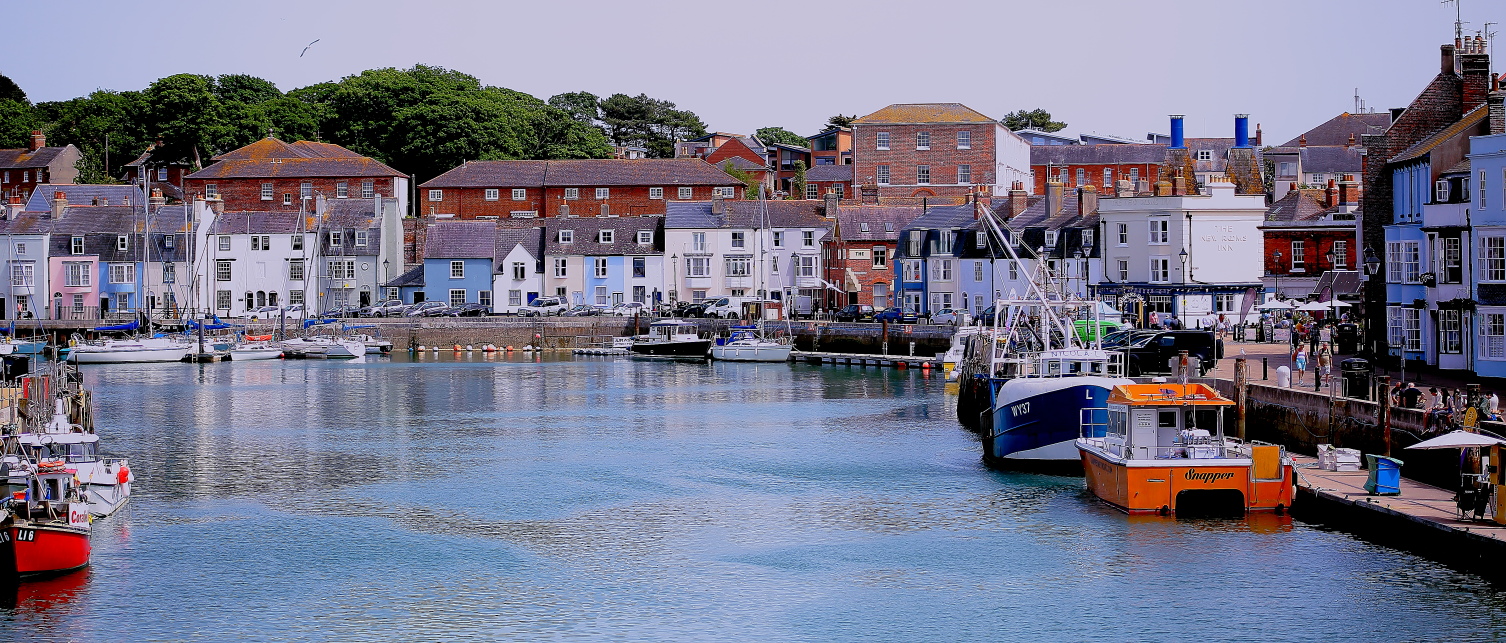
Love exploring Weymouth and Dorset? Take home beautiful coastal photography, digital artwork and local prints from my Folksy store.
Prices start from just £8.50 and include Weymouth Harbour, Weymouth Beach, Portland, Dorset landscapes and many more local scenes.
Shop All Dorset Prints →


Church Ope Cove, Portland - Hidden Coastal Gem, Beach, Walks & History
Church Ope Cove is one of the most atmospheric and beautiful spots on the Isle of Portland in Dorset. Tucked below Rufus Castle and near Portland Museum, this small sheltered cove offers dramatic cliffs, historic ruins, beach huts, and one of the most peaceful coastal settings in the area.
Reached via a narrow lane near Easton and Wakeham, the final approach opens up into a striking viewpoint where bright white Portland stone contrasts with deep blue sea views across the English Channel.
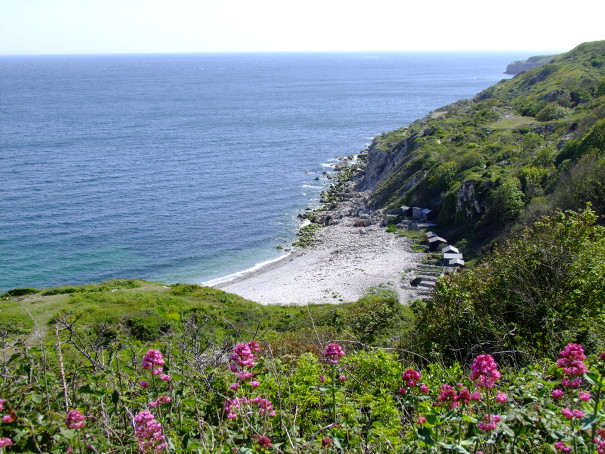
On a bright day, with the light hitting the Portland stone and the water calm in the bay, you could easily be forgiven for thinking you are somewhere in the Mediterranean rather than the Dorset coast.
This is not a typical sandy beach. Church Ope Cove is a secluded, stone-covered shoreline shaped by centuries of quarrying and coastal change, giving it a rugged and unique character.
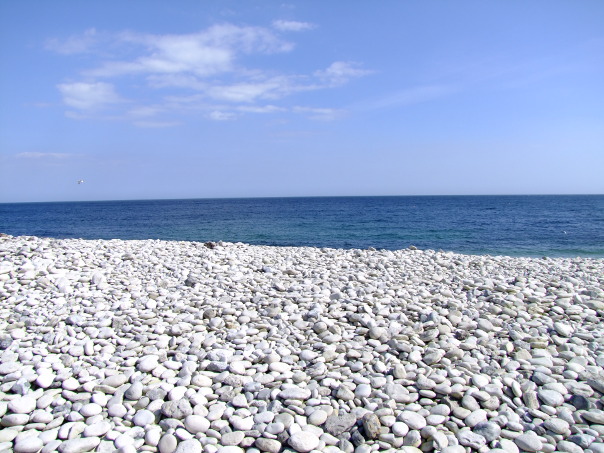
Church Ope Cove Beach
Church Ope Cove is a small stony beach made up of smooth white and grey pebbles formed through natural erosion and Portland's quarrying history.
A small stream runs through the stones and out to sea after rainfall, adding to the natural atmosphere of the cove.
Access is via steep steps from the clifftop viewpoint, which helps preserve its quiet and hidden nature.
Beach Huts at Church Ope Cove
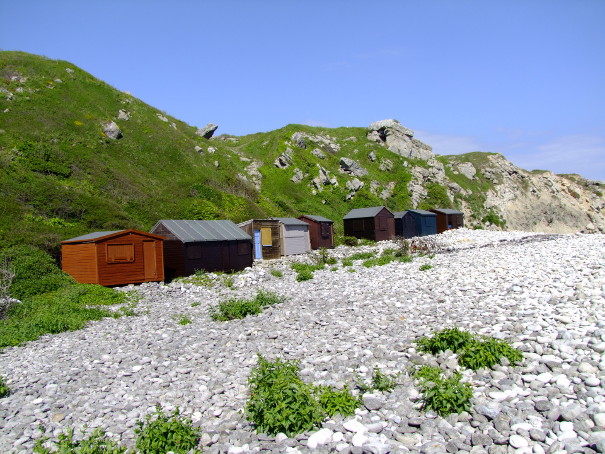
A small number of traditional beach huts sit along the edges of the cove, each positioned in a sheltered and scenic location.
These huts are highly sought after due to their privacy and unique cliffside setting, making Church Ope Cove one of the most distinctive beach hut locations on the Jurassic Coast.
Church Ope Cove Walk
Church Ope Cove is also the starting point for one of Portland's most scenic coastal walks. From the viewpoint above the cove, you can either follow the steep steps down to the beach itself or head in the opposite direction along the coastal path, where dramatic cliff views open up across the coastline. Both routes offer a very different perspective of this beautiful part of Portland.
- Clifftop views above the cove
- Steep descent to the beach
- Coastal paths along rugged cliffs
Close by is St Andrew's Church ruins, known locally as the 'Pirates Graveyard'.
Rufus Castle & Viewpoint
Above the cove stands the ruins of Rufus Castle, one of Portland's oldest surviving fortifications.
Although only fragments remain today, the castle still dominates the clifftop skyline and forms one of the most photographed views on Portland.
Nearby attractions include Portland Museum.
Church Ope Cove Pirates Graveyard (St Andrew's Church)
Hidden in woodland above the cove are the ruins of St Andrew's Church and its ancient graveyard.
Dating back to the 12th century, this is believed to be one of the earliest churches on Portland. It was eventually abandoned due to landslips and coastal erosion.
A skull-and-crossbones engraving led to local folklore naming it the Pirates Graveyard', although it was never actually a pirate burial site.
Read more about Pirates Graveyard
Smuggling at Church Ope Cove
Smuggling was once widespread all along the Dorset coast and secluded coves like Church Ope Cove would have been ideal landing spots for illicit goods.
With its hidden location beneath steep cliffs and limited visibility from inland, it doesn't take much imagination to picture small boats arriving here under cover of darkness carrying contraband such as brandy, tea, tobacco, silk and rum.
The famous novel Moonfleet, written by J. Meade Falkner, was set in the nearby village of Fleet and helped cement Dorset's reputation for smuggling folklore. While fictional, the story was heavily inspired by the very real smuggling activity that once took place along this stretch of coast.
Church Ope Cove's isolated setting, hidden beach and difficult access would have made it a perfect place to quietly bring goods ashore away from customs officers and prying eyes.
Want to learn more about Dorset's smuggling history? Read our full guide to smuggling in Weymouth and Dorset .
Church Ope Cove in World War Two
During World War Two, Portland became one of the most heavily defended parts of the Dorset coastline due to the strategic importance of nearby Portland Harbour.
The harbour was a major naval base, home to warships, submarines and later large numbers of American troops preparing for the D-Day landings. Because of this military importance, Portland was frequently targeted by German air raids throughout the war.
As one of the few potential landing points on the eastern side of Portland, Church Ope Cove was considered vulnerable to enemy invasion. Like many parts of Britain's coastline, the beach and surrounding cliffs were heavily defended.
- Barbed wire was placed along parts of the beach
- Land mines were installed to deter enemy landings
- Pillboxes and observation posts were positioned on higher ground
- Coastal defences monitored the English Channel for enemy activity
The peaceful cove visitors see today would have looked very different during wartime, with defensive obstacles, military patrols and constant awareness of potential attack.
Church Ope Cove was also close to Portland's wider wartime activity, including the embarkation of troops for D-Day and the heavy bombing raids that targeted Portland Harbour during the war.
Today the cove feels remote and tranquil, but its wartime role adds another fascinating chapter to the long history of this remarkable stretch of coastline.
To learn more about Portland's military history, visit the nearby Portland Harbour guide.
Church Ope Cove and the First Viking Raid in England?
Church Ope Cove is believed to have been the landing site of the first recorded Viking raid on Britain.
In either 787 AD or 789 AD (sources vary slightly), three Viking ships are believed to have arrived on Portland. A local royal official is said to have mistaken the newcomers for merchants and rode down to meet them.
Instead, the encounter turned violent and the official was killed - marking what many historians consider to be the first recorded Viking attack on England, several years before the far more famous raid on Lindisfarne in 793 AD.
Standing on the quiet beach at Church Ope Cove today, it is difficult to imagine Viking ships appearing on the horizon, but its sheltered landing point would have made it one of the few practical places to come ashore on Portland.
It adds yet another fascinating layer of history to a place already known for smugglers, pirate legends, medieval ruins and wartime defences.
Why Visit Church Ope Cove?
- Hidden, peaceful stony beach
- Rufus Castle cliff views
- Historic St Andrew's Church ruins
- Beach huts in unique setting
- Coastal walking routes
- Photography and wildlife
Frequently Asked Questions
Is Church Ope Cove sandy?
No, it is a stony pebble beach.
Is Church Ope Cove easy to access?
No, access involves steep steps and uneven paths.
Why is it called Pirates Graveyard?
The name comes from folklore linked to a skull-and-crossbones gravestone in the nearby ruins.
Are there facilities?
No facilities are available at the cove.
Explore More Around Portland
The Isle of Portland is packed with dramatic coastal scenery, historic landmarks, hidden coves, and some of the most interesting walking routes on the Dorset coast. If you are exploring Church Ope Cove, it's well worth taking time to discover more of the surrounding area.
From Victorian engineering and naval history to quiet beaches and clifftop viewpoints, Portland offers a wide variety of places to explore within a short distance.
- The Isle of Portland Guide - A full overview of the island, its villages, cliffs, and coastline
- Portland Harbour & Breakwaters - History, views, shipwrecks and modern harbour life
- Church Ope Cove Pirates Graveyard - Ancient church ruins, folklore, and cliffside history
Whether you are walking the coast path, visiting historic sites, or simply enjoying the views, these nearby locations help complete the full Portland experience.
Own a tourism or visitor-focused business?
Reach visitors planning trips to Weymouth and Dorset.
Learn How to Get FeaturedLatest Articles
Discover our newest guides exploring Dorset's history, hidden gems and fascinating places.
The Nothe Fort is a victorian fort now a museum of life in Weymouth during world war II.

The Pirates Graveyard at Church Ope Cove on Portland is found high above Church Ope Cove.
Tyneham Ghost Village is a deserted village.

There are plenty of things to do in Weymouth when it rains and lots more things to do around Dorset too.
Did you know that the Black Death arrived in England in 1348 through the port of Weymouth.
Portland Harbour History, the Portland Breakwaters, the sinking of HMS Hood and Portland at war.